
When Do You Need a Permit for a Home Renovation?
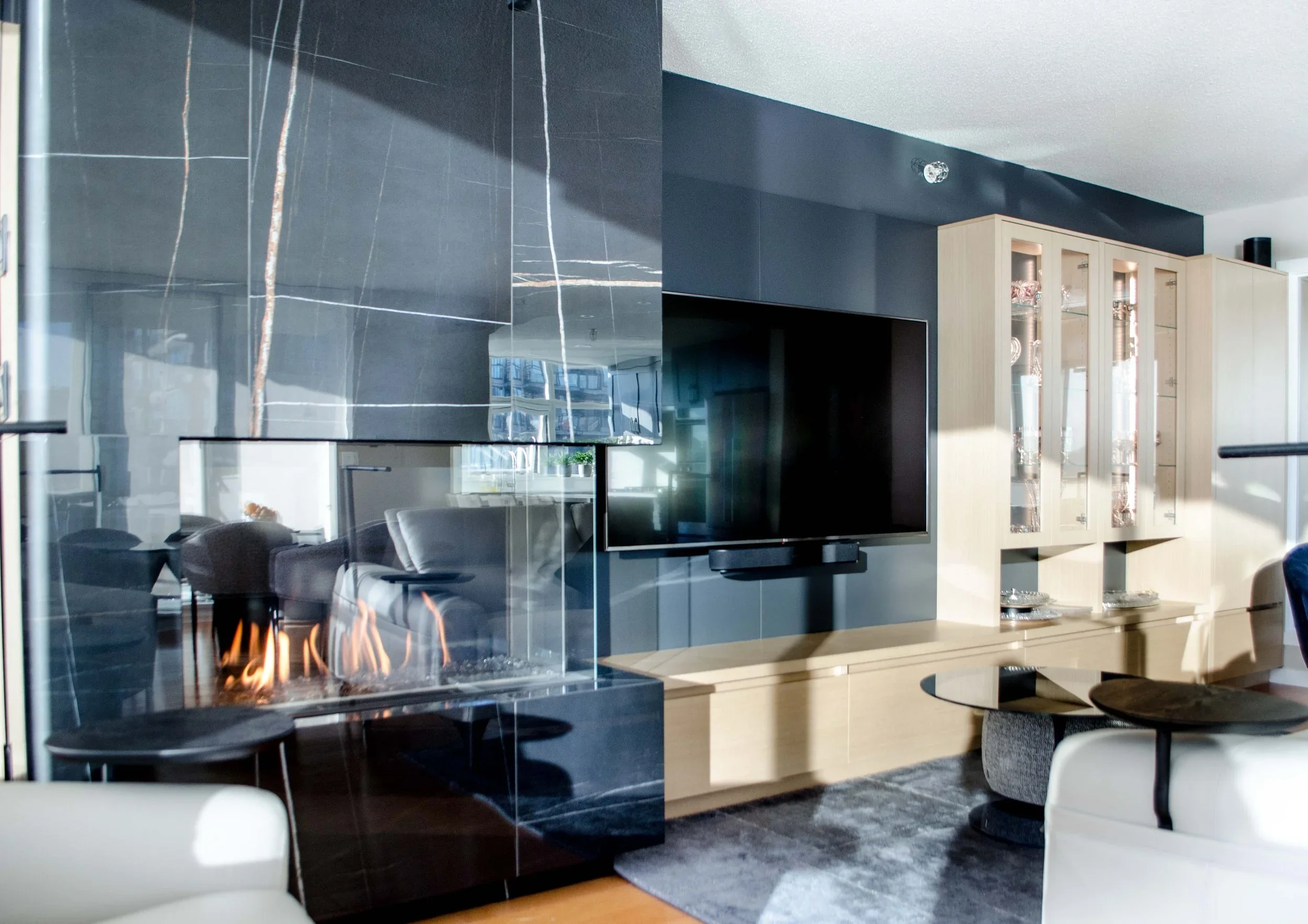
Full home renovation we completed in Olympic Village full project details here.
If you're planning a home renovation in Metro Vancouver or the Sea to Sky Corridor, one of the first questions you'll face is whether you need a permit. The honest answer is: probably yes, and the consequences of getting it wrong are significant enough that it's worth understanding exactly when a permit is required before work starts.
This guide covers permit requirements for residential renovations across eight municipalities: City of Vancouver, Burnaby, Coquitlam, Port Moody, District of North Vancouver, City of North Vancouver, West Vancouver, and the District of Squamish. Each runs its own building department and its own application process, but they all operate within the same provincial framework, the BC Building Code, which means the underlying triggers are more consistent across jurisdictions than most homeowners expect.
Roka Projects manages the full permit package on every project we build. What follows is what we've learned from permitting residential renovations across all of these municipalities.
Strata Properties: Building Permit and Strata Approval Are Both Required
If your home is in a strata corporation, a condo, townhouse, or any other strata-titled property, a municipal building permit is not the only approval you need before renovation work can begin. Strata council approval is required for any renovation that requires a building permit, and in many cases for work that doesn't require a municipal permit as well.
These are two separate processes that run independently of each other:
The municipal building permit is issued by the local building department and confirms the work meets the BC Building Code and municipal bylaws.
The strata council approval is granted by your strata corporation and confirms the work complies with the strata's bylaws and rules, including any requirements around noise, working hours, protection of common areas, and approved contractors.
Neither approval substitutes for the other. Both must be in hand before construction starts. Starting work with only one approval, or neither, exposes you to stop-work orders from the municipality, fines from the strata, and potential liability for damage to common property.
In practice, the strata approval process runs separately from and often slower than the municipal permit process. Some strata corporations require a formal application with drawings, contractor information, and a damage deposit. Others are more straightforward. Check your strata's bylaws and contact your strata manager early, before you've engaged a contractor or spent money on drawings, to understand what's required and how long it typically takes.
Roka has managed renovations in strata buildings across Metro Vancouver and is familiar with the requirements of the municipalities and strata types we work in. If your project is in a strata, let us know at the outset. We'll factor the strata approval process into the project timeline from day one.
The Universal Rule: What Triggers a Permit in BC
Before getting into municipality-specific rules, it helps to understand what the BC Building Code requires across all jurisdictions. Every municipality in this guide enforces the same provincial code, their local bylaws add specifics, but the baseline triggers are consistent.
A permit is required when the scope involves any of the following:
Any new construction or addition to an existing building
Removing or altering a structural or load-bearing wall
Any wall work that involves or exposes electrical, plumbing, or fire-rated assemblies
Any electrical work beyond simple repairs: new circuits, panel upgrades, adding outlets in wet areas
Any plumbing work that relocates or adds fixtures, or involves work covered by drywall
Gas line work: always requires a permit and must be performed by a licensed gas fitter
Touching a fire-rated wall or assembly
Creating or expanding a secondary suite
Finishing a basement to create a habitable space
Home additions of any size
Homes built before 1990: hazmat assessment required
Before any renovation work begins on a home built before 1990, asbestos-containing materials must be inventoried and a risk assessment completed by a qualified individual. This is a WorkSafeBC requirement that applies across all municipalities and all renovation scopes, not just major projects. If hazardous materials are found, licensed abatement is required before construction can proceed. This applies regardless of whether a building permit is required for the scope.
A permit is generally not required for:
Replacing finishes and fixtures in the same location: new cabinets without moving plumbing, new countertops, flooring, paint
Replacing a toilet, faucet, or sink in the same location
Replacing appliances in existing locations
Cosmetic repairs that don't affect structure, electrical, plumbing, or fire safety
The practical test: if the scope changes what's behind the walls, electrical, plumbing, structure, or fire separation, a permit is required. If the scope is purely surface, finishes, fixtures in the same place, paint, it typically isn't. When in doubt, ask your municipality before work starts, not after.
Permit Requirements by Municipality
City of Vancouver
Vancouver has the most active residential renovation market in the region and, in some ways, the most complex permit process. The housing stock spans everything from pre-war character homes to new condos, and the permit triggers reflect that variety.
A permit is required for any new construction, any renovation involving moving interior walls, and any work on existing plumbing, electrical, or gas lines. For larger projects, particularly those involving zoning relaxations or changes in land use, a development permit may also be required before a building permit can be submitted. If you're not sure whether your project triggers the development permit requirement, the Development and Building Services Centre can confirm before you start spending money on drawings.
Heritage and character retention areas add a layer to the process. If your home is designated heritage or sits in a character retention area, additional approvals may be required. This isn't a reason not to proceed, we've completed extensive renovations on character homes throughout Vancouver, but it adds time to the approval process that needs to be factored in from the start.
Vancouver has moved most permit applications online through their ePlan portal, which works well once you understand the submission requirements. Incomplete applications are the most common cause of delays. Applications prepared to pass first review avoid the back-and-forth that adds weeks to timelines.
Processing times: simple residential renovations typically 2 to 4 weeks; secondary suites 6 to 12 weeks; additions 10 to 18 weeks.
From the City of Vancouver's website:
Generally, you'll be required to have a permit to begin construction, such as:
Any new construction (new buildings and/or renovations to existing buildings that create a new area)
Adding a secondary suite to an existing house
Renovation projects that include moving interior walls and/or existing plumbing, electrical, or gas lines
Structural repairs
Drywall repairs to fire separations in multi-unit residential buildings
Building or altering a garage, shed, or deck
Projects that don't require a permit:
Replacing fixtures, cabinets, or flooring
Carrying out non-structural maintenance and minor repairs to the exterior of your home
Painting
Unclogging drains
Replacing an existing electric powered hot water tank
Replacing defective fuses, receptacles, or switches
Installing roofing, gutters, or drain-pipes
Development and Building Services Centre, 515 West 10th Avenue | 604-873-7611 | vancouver.ca
Burnaby
Burnaby's permit requirements follow the BC Building Code baseline closely. A permit is required for any project involving excavation, alteration, enlargement, removal, fire repair, or demolition of any building or structure, including modifications to the interior or exterior of your home and adding secondary suites. Minor works, replacing fixtures, cabinets and flooring, painting, or minor non-structural repairs, do not require a permit.
One thing worth knowing about Burnaby right now: as of July 1, 2026, the city is updating its development approval process. For some projects, a Development Permit will now be required before a Building Permit can be submitted. If you're planning a project in Burnaby, confirm the current requirements before applying. This is a real process change that affects timelines.
All residential building permit applications in Burnaby must be submitted online through the My Permits Portal. Paper applications are no longer accepted.
From the City of Burnaby's website:
When do you need a permit?
Any construction project that includes the excavation, erection, enlargement, alteration, removal, fire repair or demolition of any building or structure including accessory and temporary buildings requires a permit.
Minor works such as replacing fixtures, cabinet and flooring, painting the inside of your home or doing minor non-structural repairs to the outside of your home do not need a permit.
If you are unsure if your project requires a permit, please contact the Building Department.
Building Division, 4949 Canada Way | 604-294-7130 | burnaby.ca
Coquitlam
Coquitlam's permit requirements are straightforward. A permit is required for most new construction and for changes to an existing building, including basement finishing, structural repairs, secondary suites, and anything affecting fire and life-safety systems. Minor works like cosmetic repairs and fixture replacements in the same location don't require a permit.
The practical thing to know about Coquitlam right now is timeline. The city has seen a significant increase in permit application volumes following new provincial housing legislation, and first review of a residential application is currently running 15 to 20 business days. That's before back-and-forth on any deficiencies. If your project is in Coquitlam, start the permit process earlier than you think you need to.
All permit applications can be submitted online.
From the City of Coquitlam's website:
When is a building permit required?
Construction of a new building
Addition to existing building
Building a new secondary suite or legalizing an existing secondary suite
Creating new rooms or spaces within existing building
Finishing a basement
Demolishing a building or part of a building
Restoration, maintenance or repair of building's structural components and systems
Restoration, maintenance or repair of significant building fire and life safety components and systems
When is a building permit not required?
Restoration, maintenance or repair of building elements and systems that do not affect the structural or fire and life safety performance of a building
Emergency maintenance
Decks less than 0.6 metres above grade
Retaining walls under 1.2 metres in height
Fences
Repairing drain tile
Installation of a new roof on an existing building
Sidewalks or patios on private property
Storage or garden shed structures under 10m²
Building Permits Division, 3000 Guildford Way | 604-927-3430 | coquitlam.ca
Port Moody
Port Moody covers a mix of older single-family homes, townhouses, and waterfront properties along Burrard Inlet. Permit requirements are consistent with the BC Building Code baseline. A building permit is required before any new construction, renovation, or addition.
One Port Moody-specific thing to know: the City does not issue gas or electrical permits and does not conduct gas or electrical inspections. These are handled by Technical Safety BC. Your contractor will manage this, but it means your building permit and your trade permits come from different authorities, something to be aware of when tracking approvals.
Building permit applications are submitted through Port Moody's online eServices portal. For the complete list of what requires and doesn't require a permit, visit portmoody.ca/home-and-property/building-and-renovating.
Building Permits, 100 Newport Drive (Second Floor) | 604-469-4534 | portmoody.ca
District of North Vancouver
The District of North Vancouver covers a large geographic area with significant variation in terrain, lot size, and housing age. The permit triggers are consistent with the provincial baseline. A building permit is required to alter an existing house, build an addition, create a secondary suite, or demolish a building.
What's different about the District compared to more urban municipalities is the terrain factor. Properties within slope stability or geotechnical hazard areas may require a geotechnical report as part of the permit application. On the North Shore, this applies to more properties than homeowners typically expect. The geography of the area means slopes and site conditions are a real consideration, not a theoretical one. Confirm whether your property is in a designated hazard area before submitting your application.
If your property is within a development permit area, a development permit may also be required before the building permit. In most cases the development permit comes first.
The District accepts electronic applications only, no paper submissions.
The District of North Vancouver organizes permit requirements by project type rather than a single list. Requirements for common home building and improvement projects, including decks, secondary suites, coach houses, and accessory buildings, are at: dnv.org/business-development/requirements-common-home-building-and-improvement-projects
Building Department, 355 West Queens Road, North Vancouver | 604-990-2311 | dnv.org
City of North Vancouver
The City of North Vancouver is a separate municipality from the District, a distinction that catches people off guard regularly. If your address says "North Vancouver," check your property tax notice to confirm which jurisdiction you're in. The two municipalities have separate building departments, separate application processes, and separate timelines.
The City covers a denser urban core than the District, with a higher proportion of condos, townhouses, and older single-family homes. A permit is required before any major construction or alteration: structural changes, electrical and plumbing work, secondary suites, additions, and basement finishing all require permits.
The City generally processes residential permits faster than the City of Vancouver, typically 4 to 8 weeks for standard renovation applications.
From the City of North Vancouver's website (cnv.org):
Building permits are issued for, but not limited to, these construction projects:
Erecting a new structure
Adding components (e.g. wing or unit) to an existing structure
Finishing or altering the interior of a structure
Moving a structure
Demolishing a structure
Permits and Inspections, 141 West 14th Street, North Vancouver | 604-985-7761 | cnv.org
West Vancouver
West Vancouver is worth understanding on its own terms. The District has its own character, large lots, older custom homes, significant heritage presence, and its permit process reflects that. A building permit is required for any new construction, addition, or alteration to an existing residential building, consistent with the BC Building Code baseline.
Two things to know before you start. First, West Vancouver requires permits for certain work that other municipalities treat as minor. Don't assume a scope is permit-exempt in West Vancouver without confirming. The bar is higher here than most other municipalities in this guide.
Second, development permits. Some single-family dwelling projects in West Vancouver require a development permit before a building permit can be submitted. This is more common in West Vancouver than elsewhere. If your project involves any exterior changes, additions, or significant interior reconfiguration, check whether a development permit applies before engaging a designer. Adding this step unexpectedly mid-process adds weeks.
Heritage properties add another layer. If your home is identified as having heritage value, which you can confirm on the District's WestMap tool, consult with the Planning Division before submitting a building permit application.
All applications are electronic only.
From the District of West Vancouver's website (westvancouver.ca):
If you are constructing a structure on your property, including retaining walls, stairs, pools and decks, you will need a building permit. Generally permits are not required for re-roofing, exterior cladding, window replacement, fences or landscaping.
Note: permit requirements vary depending on your lot size and dimensions, presence of creeks, if you are on a slope, or if a covenant is attached to your property. Always confirm with the District before assuming a scope is permit-exempt.
Building and Development, 750 17th Street, West Vancouver | 604-925-7055 | westvancouver.ca
District of Squamish
Squamish is about 45 minutes north of Vancouver on the Sea to Sky Highway, and it operates as a fully independent municipality with its own building department and its own process. A building permit is required if you're planning to build, renovate, or demolish a residence, the same provincial triggers apply.
Squamish has two things worth flagging that don't come up as often in Metro Vancouver municipalities. First, pre-application requirements. For some projects, particularly those involving significant additions or changes to the building footprint, a Land Development Permit, Zoning Bylaw Amendment, or Servicing Agreement may be required before a building permit application can even be submitted. Confirm whether any upstream approvals apply to your project before engaging a designer.
Second, mid-construction changes. In Squamish, if the scope changes during construction, different framing, relocated plumbing, structural modifications, an amended plan stamped by a Professional Engineer may be required before those changes can proceed. This is more formally enforced than in some other municipalities, and it's worth understanding before work starts.
Applications can be submitted through the District's online eApply service or in person at Municipal Hall.
From the District of Squamish Building Permit Guide (squamish.ca):
When is a Building Permit Required?
You are required to apply for a Building Permit for the following projects:
New construction
Additions and alterations
Construction of an accessory building larger than 10m² (107 ft²)
Making new openings for, or changing the size of, doors and windows
Changing occupancy
Adding a suite
Installing, changing or removing partitions and load bearing walls
Excavating a basement or constructing a foundation
Installing or reconstructing chimneys or fireplaces (including wood burning stoves), also requires a permit from District of Squamish Fire Rescue 604-898-9666
Building a deck higher than 0.6m/2.0ft above ground and/or attached to your building
Retaining walls over 1.2m/4.0ft in height
Swimming pools
Re-insulating, adding or removing insulation
Moving a building or structure
Demolition
Plumbing alteration
Change to water, sanitary and/or storm service
Altering fire separation
Development Services, 37955 Second Avenue, Squamish | 604-815-5002 | squamish.ca
Other Municipalities
The eight municipalities covered in this guide represent the areas where Roka Projects regularly works. If your project is in a municipality not listed here, Richmond, Surrey, Delta, Langley, Maple Ridge, New Westminster, or elsewhere in BC, the same provincial framework applies. Every municipality in British Columbia enforces the BC Building Code, which means the universal permit triggers covered at the start of this guide hold regardless of jurisdiction.
What varies by municipality is the application process, the fee schedule, the processing timeline, and any local requirements that go beyond the provincial baseline.
The best first step is to visit the municipality's official website and search for "building permit." Every BC municipality is required to publish their requirements. If you can't find what you need online, call the building department directly before work starts. The question is simple: "Does this scope of work require a permit?" They'll tell you.
For strata properties anywhere in BC, a building permit and strata council approval are both required before work begins. See the strata section at the start of this guide.
What Requires a Permit by Scope
The municipal sections above cover the general rules. Here's how those rules apply to the four renovation scopes most common to Roka's work.
Kitchen Renovations
A cosmetic kitchen renovation, replacing cabinets, countertops, flooring, and paint without moving plumbing or electrical, typically does not require a permit. Most full kitchen renovations do require permits because they involve at least one of the following: new or relocated electrical circuits, plumbing changes, or wall modifications. Any electrical or plumbing work performed within a wall cavity requires the respective trade permit to be pulled under a building permit. This applies even when fixtures are staying in their existing locations if the work requires opening walls.
If you're opening walls as part of the kitchen renovation, to reconfigure layout, remove a soffit, or create an open-concept space, a building permit is required. If a structural wall is being removed, a structural engineer is required in addition to the building permit.
Bathroom Renovations
A basic bathroom refresh, new vanity, new tile, new fixtures in the same locations, typically does not require a permit, provided no work is being done within wall cavities. A permit is required as soon as the scope involves: any electrical or plumbing work within a wall cavity; relocating the toilet, shower, or tub drain; adding a new bathroom where one didn't previously exist; or adding a dedicated electrical circuit for heated floors or ventilation.
Most full bathroom renovations that involve opening walls or relocating any fixture require at least a plumbing permit and typically a building permit as well.
Home Additions
All home additions require a building permit, no exceptions across any of the eight municipalities in this guide. Additions also typically require engineer-stamped structural drawings, a site plan showing setbacks from property lines, energy compliance documentation under the BC Energy Step Code, and in some municipalities, a development permit before the building permit can be submitted.
The permit process for an addition is more involved than for an interior renovation. Budget 10 to 18 weeks for permit approval depending on the municipality and the complexity of the project.
Secondary Suites and Basement Conversions
Creating a secondary suite or converting a basement to habitable space requires a building permit in every municipality in this guide. The BC Building Code sets minimum requirements for legal secondary suites: minimum ceiling height of 1.95m (6'5"), egress windows in sleeping rooms with a minimum 0.35m² opening, fire-rated separation from the main dwelling, smoke and CO detectors, and separate electrical metering in most cases.
Permit packages for secondary suites typically include floor plans showing suite layout, egress windows, fire separation walls, smoke and CO detector locations, and compliance with local zoning bylaws. In the City of Vancouver, confirm that your zoning permits a secondary suite before applying. Most RS-1 and RS-2 zoned lots now permit one suite, but verify at vanmapp.vancouver.ca before proceeding.
What Permits Cost
Permit fees are calculated based on the estimated construction value of your project and vary by municipality. These are approximate ranges, confirm current fees with your building department before budgeting.
| Scope | Approximate Permit Fee Range |
|---|---|
| Minor residential renovation | $400–$800 |
| Kitchen or bathroom renovation | $800–$2,000 |
| Secondary suite addition | $1,200–$3,500 |
| Home addition | $1,500–$5,000 |
These figures cover building permit fees only. Separate trade permits, electrical, plumbing, gas, carry their own fees and are applied for by the licensed contractor performing that work. In most municipalities, electrical and gas permits are issued by Technical Safety BC rather than the local building department.
Three additional costs that are often overlooked:
Permit drawings: most renovation permits require drawings prepared by a designer, building designer, or architect. Depending on scope, this runs $2,000–$15,000+.
Engineering: structural changes require a stamped engineer's letter or drawings. Budget $1,500–$5,000+ depending on complexity.
Development Cost Charges: some municipalities levy DCCs on secondary suite creation and additions. Confirm with your building department whether these apply to your project.
The Consequences of Unpermitted Work
Skipping permits is a short-term decision with long-term consequences. Here's what's actually at stake.
Stop-work orders and fines. If unpermitted work is discovered, by a neighbour complaint, a subsequent permit application, or a routine inspection, the municipality can issue a stop-work order immediately. All construction stops until the permit situation is resolved. In the City of Vancouver, working without a permit when one is required typically results in a penalty of double the original permit fee. Fines across Metro Vancouver municipalities range from $200 to $10,000 depending on scope and jurisdiction.
Forced removal. In some cases, work completed without a permit must be removed entirely. If a wall was moved without a permit, the municipality can require it to be restored. If a secondary suite was built without a permit, the suite may need to be deconstructed. The cost of undoing work is always higher than the cost of doing it right the first time.
Resale complications. Unpermitted work appears, or notably doesn't appear, in a property's permit history, which buyers and their lawyers check. Unpermitted renovations can delay or collapse a sale, reduce the appraised value of the property, or require the seller to bring the work into compliance before closing. As the homeowner, you carry this liability even if a contractor told you a permit wasn't required.
Insurance implications. If unpermitted work contributes to a loss, a fire, a flood, structural failure, your insurer may deny or reduce the claim on the basis that the work didn't meet code. This is a standard exclusion in most residential property insurance policies.
The contractor told you it wasn't needed. Under BC law, the homeowner is responsible for ensuring permits are obtained, not the contractor. If a contractor performs work without the required permit, the liability sits with the property owner. Choosing a contractor who handles permitting as a standard part of their process is one of the most important decisions you'll make.
How Roka Handles Permitting
Roka manages the full permit package on every project where permits are required: drawings, application, trade permit coordination, and inspection scheduling. You don't chase the municipality. We do.
Before design begins, we confirm whether your project requires a permit and which municipality's process applies. For projects involving secondary suites, structural changes, or additions, we start the permit process as early as possible, approval timelines run 4 to 10 weeks across most municipalities, and the earlier the application goes in, the earlier construction can start.
We coordinate with your designer or architect to ensure drawings meet the municipality's submission requirements from the first submission. Trade permits, electrical, plumbing, gas, are pulled by the licensed trades performing that work and coordinated by our project management team. Inspections are scheduled at the right stages so construction isn't held up waiting for an inspector.
If you're not sure where to start, the first step is a conversation about scope. We'll tell you what's required, which municipality's process applies, and what the realistic timeline looks like before anyone spends money on drawings or design.
Get Started
Understanding permit requirements is the first step. The second is working with a contractor who manages the process so you don't have to.
Roka Projects completes permitted residential renovations across Vancouver, Burnaby, North Vancouver, West Vancouver, Coquitlam, Port Moody, and the District of Squamish. If you're planning a renovation and want to understand what permits your project requires and what the realistic timeline looks like, get in touch.
For more on what renovation costs look like across project types in Vancouver, see: What Does a Renovation Cost in Vancouver?
For a full breakdown of kitchen renovation costs, see: What Does a Kitchen Renovation Cost in Vancouver?