
What Does a Kitchen Renovation Cost in Vancouver?
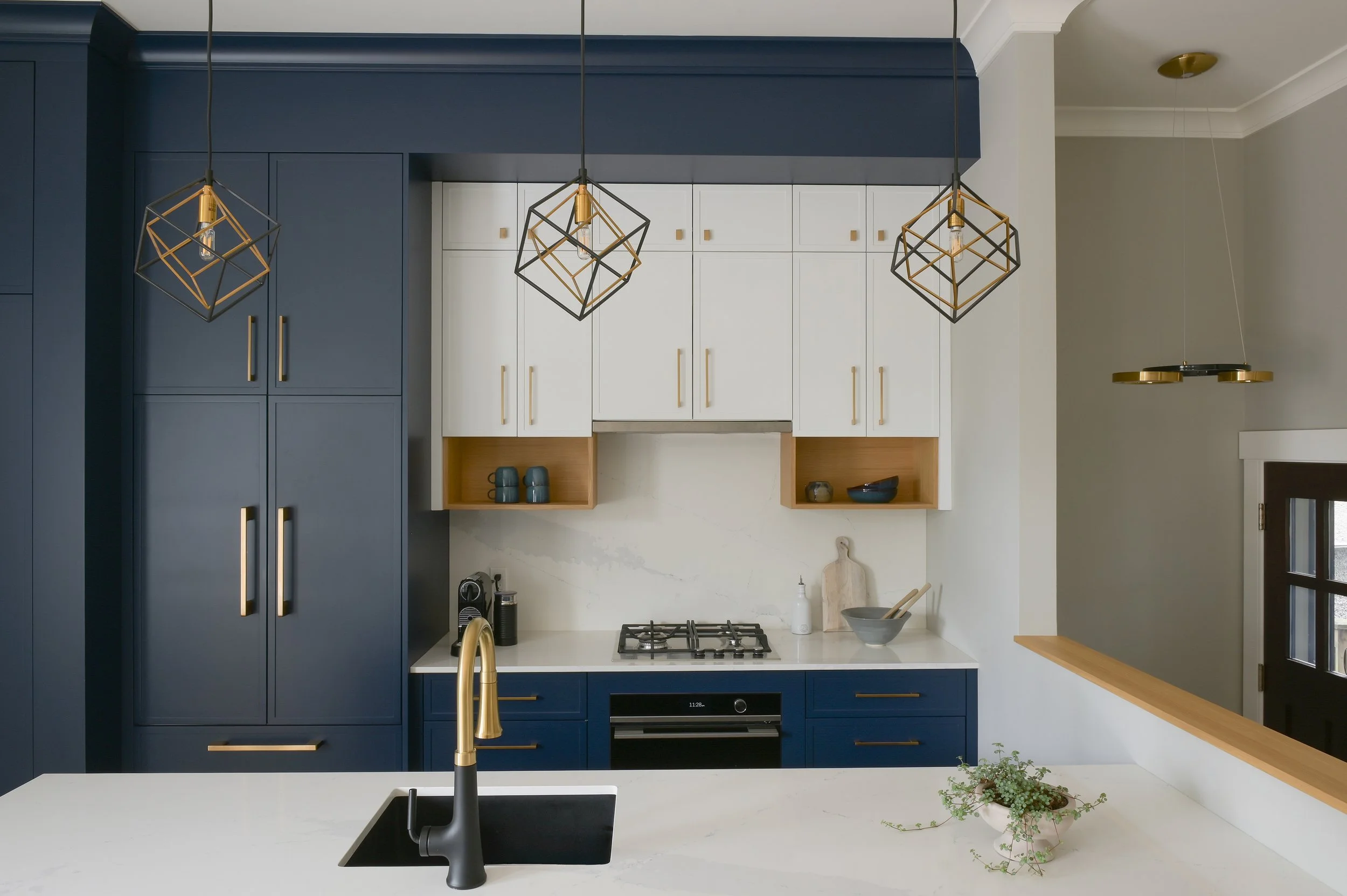
Kitchen renovation we completed in Vancouver view the price & scope details here
Every contractor in Vancouver will tell you 'it depends.' That's true — but it's not useful when you're trying to figure out whether a kitchen renovation is financially realistic right now.
Here's a more direct answer, based on five completed Roka kitchen renovations and our current estimating data:
The Everyday Kitchen (~$75,000–$90,000):
Custom-built cabinetry with base-spec finishes, standard quartz countertop, functional appliance package (~$10,000–$14,000), straightforward layout, no structural changes. A fully permitted, well-executed kitchen built to perform — every cabinet sized to the space, every detail done properly.
The Entertainer's Kitchen ($90,000–$150,000):
Custom cabinetry with upgraded finishes — painted shaker, pre-finished veneer, or a mix — premium quartz with backsplash, mid-to-high appliances (Fisher & Paykel, Bosch — ~$21,000–$30,000 including installation), upgraded lighting and electrical, layout designed around flow and gathering.
The Statement Kitchen ($150,000+):
Custom cabinetry in high-end veneers or fully bespoke finishes, vein-matched stone, premium appliances (Miele, Wolf/Sub-Zero), structural changes, complex millwork. Appliance selection, finish level, and kitchen size can push this tier well above $200,000.
These figures reflect real costs at completion — what was actually invoiced and paid — adjusted to 2026 dollars where needed. Every Roka kitchen is built to the client's goals, space,
and budget. The tiers above are a starting point for planning conversations, not a menu with a preferred option.
Most kitchen renovations we complete are part of a larger project — bathrooms, living rooms, flooring, trim, doors, and paint often included in the same scope. The costs above and below reflect the kitchen component only.
Real Projects: What Roka Kitchen Renovations Actually Cost
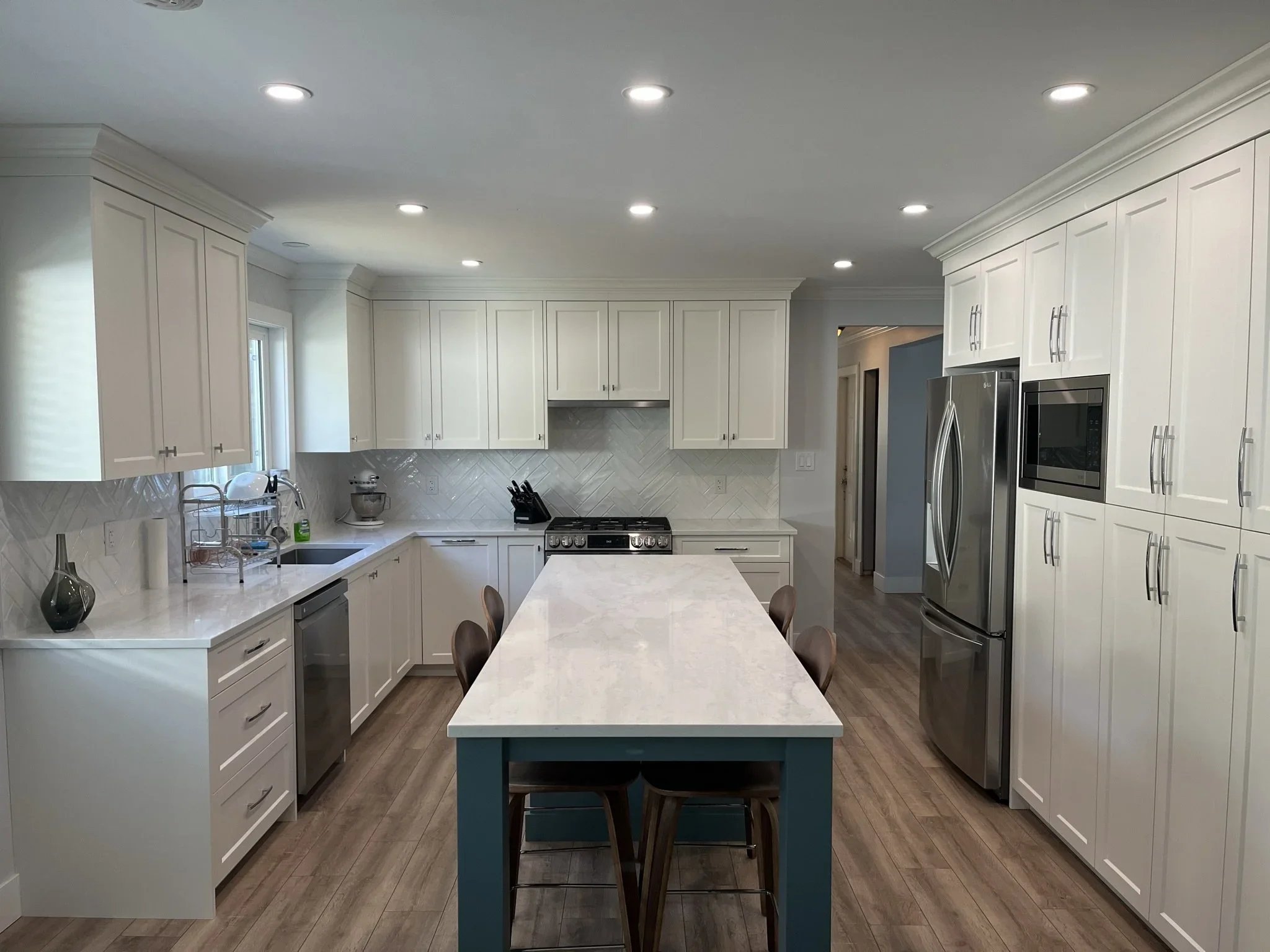
Delta Home — ~$90,000
A kitchen renovation in Delta as part of a larger living room, kitchen, and powder room refresh. Painted cabinets throughout with a straightforward layout — $20,000. Standard quartz countertops at $6,000. Appliances: LG fridge, gas range, dishwasher, and microwave — a functional base package that kept the project at the entry end of the range. No structural changes.
Full project details here.
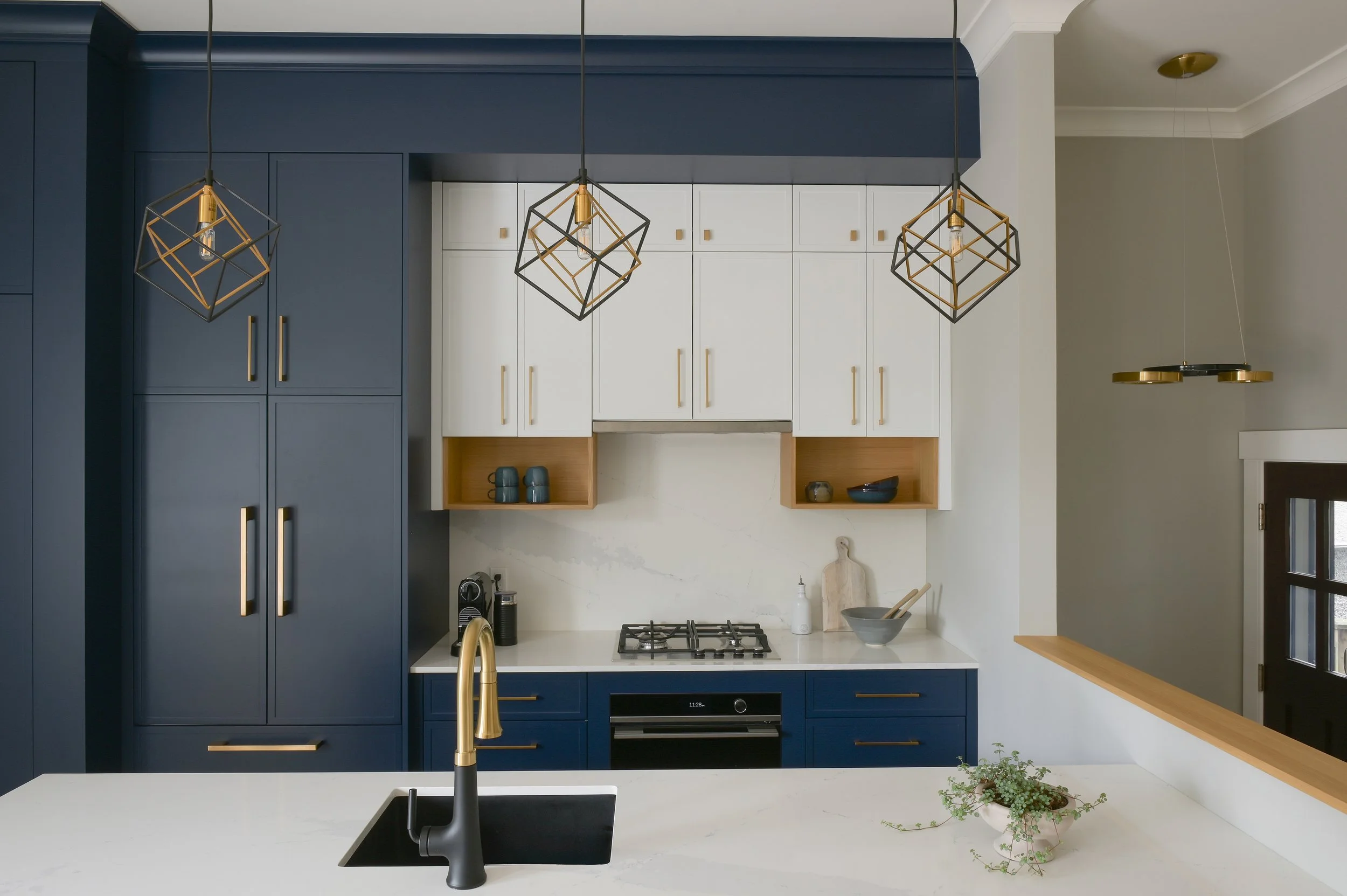
Vancouver Kitchen & Bathroom — ~$90,000
A kitchen and bathroom renovation on Welwyn Street in Vancouver, completed in 2025. Painted cabinets with a clean, considered layout — $20,000. Quartz countertops and backsplash at $8,000. Appliances: Fisher & Paykel panel-ready fridge and wall oven, Fisher & Paykel gas cooktop, Bosch built-in dishwasher, and Aura under-cabinet ventilation. A mid-to-high appliance package in an Entertainer's Kitchen budget.
Full project details here.

Burnaby Home — ~$100,000
A kitchen renovation in Burnaby as part of a full home renovation. Cabinets with a mix of painted and custom-stained veneer at $28,500. Quartz countertops at $9,700. Appliances: Fisher & Paykel French door fridge, Fulgor 36" dual fuel range, Fulgor insert hood, and Bosch undercounter dishwasher. The Fulgor dual fuel range is a premium piece that reflects the elevated finish level of this project.
Full project details here.
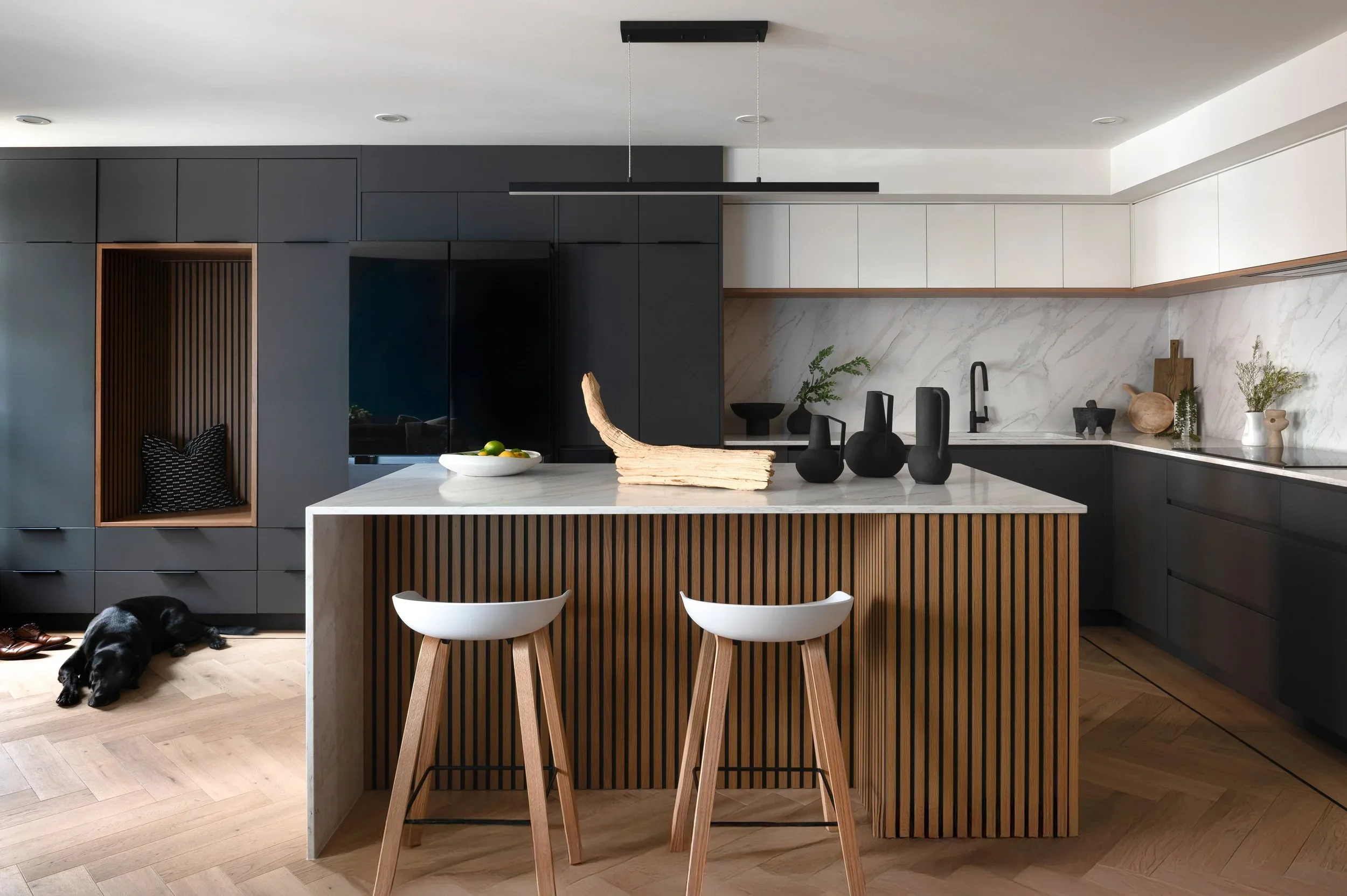
Downtown Vancouver Townhouse — ~$125,000
A kitchen renovation as part of a full townhouse renovation on Homer Street in Vancouver, completed in 2024. Pre-finished and custom veneer cabinetry at $38,625, including entry millwork. Quartz countertops including backsplash and island waterfall at $10,500. Appliances: Samsung four-door fridge, Samsung wall oven, Samsung induction cooktop, Samsung microwave, Bosch dishwasher, and KitchenAid wine cooler.
Full project details here.
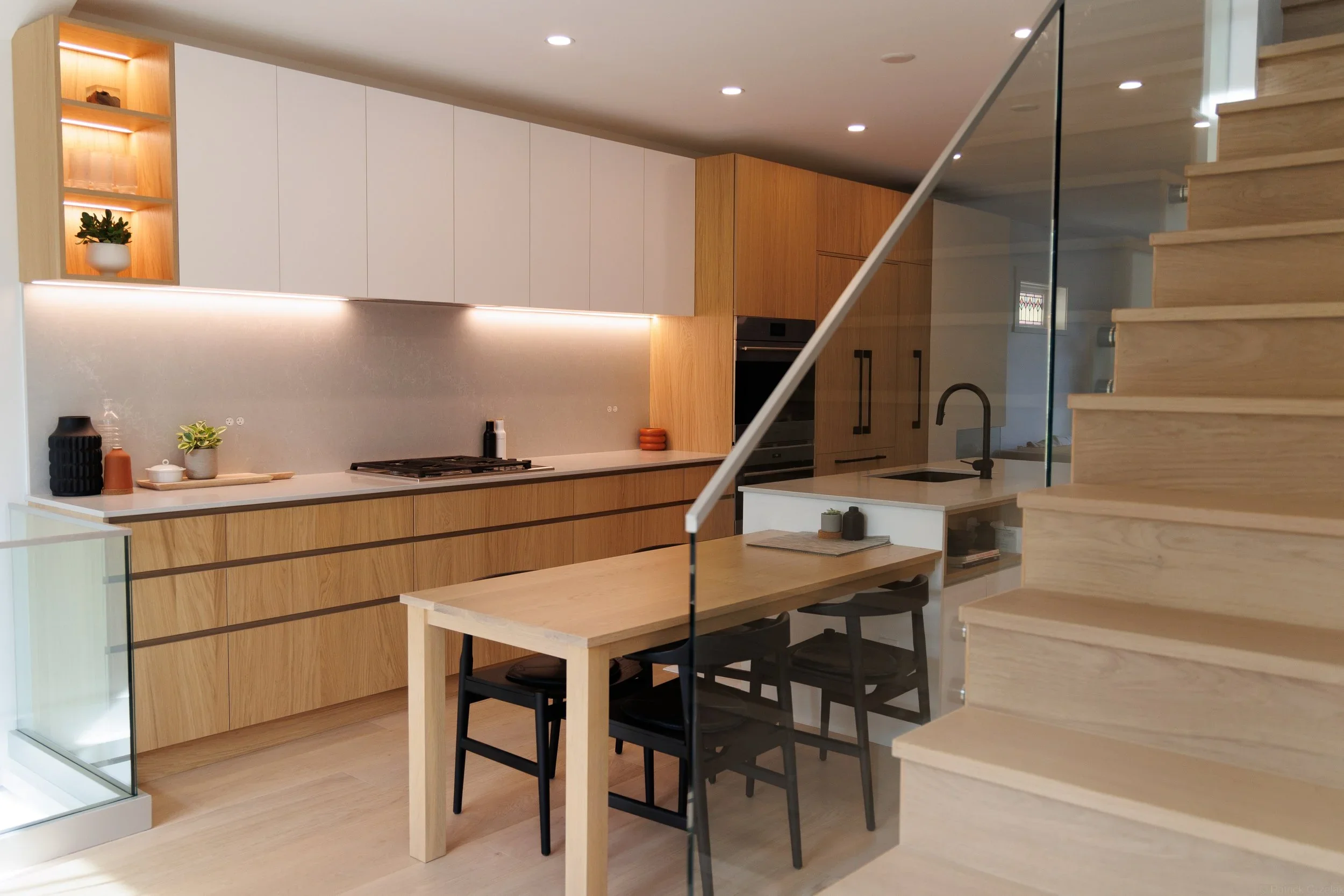
East Vancouver Home — ~$132,000
A kitchen renovation in East Vancouver as part of a full home renovation, completed in 2022 and adjusted to 2026 dollars. The kitchen involved removing a load-bearing wall to create an open-concept layout. Pre-finished veneer cabinets at $36,000, including a custom table integrated into the island. Quartz countertops including backsplash and island waterfall edge at
$9,600. Appliances: Fisher & Paykel fridge, Wolf wall oven, Wolf gas cooktop, Wolf speed oven, and Bosch 300 Series dishwasher. Full project details here.
If you're planning a renovation and want to understand what it's likely to cost, get in touch at rokaprojects.ca/contact.
Why Kitchen Renovations Cost More in Vancouver
Vancouver renovation costs run consistently above the national average. Three factors drive that.
Trades costs
Electricians, plumbers, and HVAC contractors in Metro Vancouver typically start at around $100/hr. Some trades quote fixed prices; others work time and material, where the final cost reflects what the work actually requires. Demand across residential, commercial, and infrastructure projects keeps rates elevated year-round.
Permit requirements
Most full kitchen renovations require permits, and the associated costs are real: design drawings, application fees, required upgrades, and inspection coordination all add up. Permit approval timelines run 4–10 weeks depending on the municipality and scope — time that has to be factored into the project schedule from day one.
Site logistics
Condo renovations carry costs that single-family projects don't. In multi-elevator buildings, strata typically designates one elevator for contractor use — but residents share it. A full elevator means waiting, and that time accumulates across every trade and every delivery. Additional strata requirements can include daily protection installation and removal, off-site parking, street parking costs, restricted work hours, and ongoing coordination with building management. Roka's project management team handles all of that directly — building manager contact, required notifications, access coordination — throughout the project.
None of these are contractor margin factors. They're structural to the Vancouver market and apply regardless of who you hire.
What You're Actually Paying For: A Line-by-Line Breakdown
A kitchen renovation isn't one cost — it's a series of separate scopes that add up to a total. Here's what each one involves and what it typically costs.
Demolition, Site Protection & Hazmat Remediation
Demo scope depends on what's coming out — cabinets, flooring, drywall, soffits, ceilings — and what's staying. A straightforward kitchen demo typically runs $1,000–$3,000 in labour and waste removal. Structural demolition or a full gut will be higher.
Site protection goes up before demo starts: poly separation between the work zone and the rest of the home, floor protection in traffic areas, and dust barriers. In condos, common hallway protection is required. Budget approximately $1,000 for materials.
Hazmat remediation is triggered when asbestos-containing materials or other hazardous substances are found during demolition. Pre-1990 Vancouver homes commonly contain asbestos in drywall compound, textured ceilings, or floor adhesives — none of which can be confirmed until walls open. If found, licensed abatement is required before construction continues. Budget approximately $4,000 as a contingency for homes built before 1990.
Framing
A cosmetic kitchen renovation where everything behind the walls is in good condition may require very little framing. Where the scope involves moving walls, relocating doorways, building new bulkheads or soffits, or adding blocking for cabinet support, framing becomes a more significant line item.
We may also need to straighten walls or level the ceiling so upper cabinets install with a consistent reveal — a detail that isn't visible until the walls are open but directly affects the finished result.
It's not uncommon to open a wall and find structural issues from previous renovations, rot, or mould. These can't be anticipated before demo begins and are one of the primary reasons a contingency reserve matters. Framing costs range from minimal on a straightforward cosmetic scope to significant when conditions or reconfiguration demands it.
Windows & Patio Doors
Window and patio door work is common in kitchen renovations when the goal is better natural light, improved indoor-outdoor connection, or simply replacing aging units.
Scope ranges from a direct swap — same size, same opening — to enlarging existing openings or cutting new ones. New or enlarged openings require structural work: a properly sized header, temporary shoring, and new framing.
Patio door upgrades are a frequent request. Options run from a new sliding door in an existing opening to French doors, multi-slide systems, or folding/bifold doors that fully open the kitchen to an outdoor space. The more complex the system and the larger the opening, the more structural and exterior work is involved.
Window units start at approximately $500+. Patio doors range from ~$3,000 for a French door to $12,000+ for multi-slide or folding systems. These are unit costs only — framing, structural work, and siding removal and replacement are additional.
Exterior Finish
Any penetration through the exterior envelope — hood fan venting, plumbing vents, new or enlarged windows, patio doors — requires the exterior to be properly finished and weatherproofed. This means siding removal and replacement, flashing, caulking, and restoring the building envelope.
Scope and cost vary with the number of openings and the complexity of the existing cladding. Starting at approximately $2,000 and increasing from there.
Insulation
Opening drywall triggers insulation requirements that vary by municipality. Some require upgrades in every stud space that's opened; others apply the requirement above a certain percentage of exposed wall area. Either way, insulation and vapour barrier must meet current code before drywall goes back.
Spray foam may be required in 2x4 walls where batt insulation alone can't achieve the required values. If the ceiling is affected, attic insulation may need to be reinstated as well.
Budget $1,000–$4,000+ depending on wall area opened, insulation type required, and whether attic work is involved.
Drywall Repairs
Once rough-in is complete — framing, electrical, plumbing, insulation — drywall goes back. A kitchen where only select areas were opened requires patch repairs. A full gut requires new drywall throughout.
Base (patch repairs): ~$1,500
Mid (partial re-drywall): ~$2,500
High (full re-drywall, complex areas): ~$7,500+
Electrical
Permitted modern kitchens require dedicated circuits, and renovations trigger code compliance for everything being touched. Typical scope includes pot lights, pendant lights over the island, under-cabinet lighting (puck lights or linear LED), 20-amp countertop appliance circuits (required in many municipalities), and dedicated circuits for the refrigerator, dishwasher, microwave, and range.
If a large hood fan is being installed, a make-up air unit may be required. Gas appliances with electronic ignition still need electrical connections.
Under-cabinet lighting is a real decision point: puck lights are simpler and less expensive; continuous linear LED provides better coverage and a cleaner look at higher cost.
Budget $5,000–$10,000+ for electrical. Panel upgrades, longer home runs, or complex lighting designs will push the number higher.
Plumbing
Plumbing scope hinges on whether fixtures are staying in their current locations. Reconnecting a sink in the same spot is straightforward. Moving it — even a short distance — requires relocating drain lines, which may mean opening the subfloor or the ceiling below.
Additional variables: a water line for the fridge, gas line work for a range or cooktop, dishwasher relocation relative to the sink. If existing supply lines are corroded or Poly-B — a known issue in many pre-2000 Vancouver homes — replacement is strongly recommended while the kitchen is open.
Budget $3,000–$6,000+ for plumbing. Significant relocation, gas work, or system upgrades will be higher.
HVAC
A simple hood fan reconnection can often be handled during installation without a dedicated HVAC contractor. Larger changes to ducting, ventilation routing, or exhaust systems bring in an HVAC trade.
High-capacity hood fans may require a make-up air unit to replace exhausted air — a code requirement in many jurisdictions above certain CFM thresholds. This adds both equipment and installation cost.
Budget $500–$5,000+ depending on scope. A straightforward reconnect is at the low end; make-up air installation at the high end.
Flooring
Kitchen flooring involves more complexity than it first appears. The key questions: what's existing, does it work with the new cabinet layout, can additional material be sourced if needed, and how does it transition to adjacent spaces?
Flooring more than a year or two old is typically impossible to match — manufacturers discontinue products and finishes change. The usual paths are replacing the kitchen flooring entirely, or transitioning from the existing floor into tile at the kitchen boundary.
Whether the existing floor is floating, glued, or nailed down determines demo time and cost. If cabinets are moving, the subfloor condition under old cabinet locations may need repair before new flooring installs.
Budget approximately $3,000–$8,000+ depending on material, square footage, and whether removal of existing material is required.
Painting
Painting is typically one of the last scopes before cabinets and finishing — walls, ceiling, and any adjacent areas touched by the renovation.
Base: ~$1,000
Mid: ~$2,500
High: ~$6,500+
For kitchens that are part of a larger renovation, painting scope and cost increase accordingly.
Cabinets
Cabinet cost varies with the size of the kitchen, the number of drawers, the finish selected, and layout complexity. All Roka cabinetry is custom-built for the specific kitchen. Cabinet boxes are typically plywood — not particle board, unless requested. The finish is what you see from the outside.
From most cost-efficient to premium:
Melamine — most cost-efficient, durable, limited colour options
Laminate — slightly more flexibility than melamine, similar durability
Painted MDF doors — flat panel or shaker profile; popular mid-range choice
Five-piece shaker, painted — more detail work, slightly higher cost
Pre-finished veneer — real wood look, factory-applied finish
Wood veneer with custom stain — raw veneer selected, then stain colour or tint chosen. Samples always provided for approval before proceeding.
Branded veneer — manufacturer-specific products ranging from pre-finished price points to significantly higher depending on brand and specification
Drawers add cost: hardware plus the drawer box itself. Budget approximately $300 per drawer. A kitchen with 20 drawers adds $6,000 before anything else changes.
Cabinet accessories — magic corners, pull-out spice racks, cutlery inserts, waste management systems — each add cost and are worth specifying in design, not retrofitting after installation.
Countertops
Quartz is a popular choice for its durability, consistent appearance, warranty coverage, and cost relative to natural stone. We also work with porcelain and natural stone — marble, quartzite, granite — for clients who want a specific look or material. Price varies based on material and brand, number of slabs required, edge detail, whether a backsplash is included, and whether vein matching is part of the design.
A standard quartz slab runs approximately 120" x 56"; jumbo slabs (up to 130" x 65") are available from some manufacturers. Slabs start at around $1,000 and commonly run $3,000–$4,000 for mid-range options. Natural stone can reach $10,000+ per slab.
Fabrication costs — measuring, cutting, edge profiles, sink cutouts, transportation, and installation — are on top of slab cost. The number of seams in the design and where they fall affects both slab count and fabrication complexity.
For quartz backsplashes, we use 2cm thickness when available to manage cost versus the 3cm standard for countertops. When vein matching is required, the backsplash must come from the same slab as the countertop — which affects how the slab is cut and how much material is consumed.
Backsplash
Backsplash is a decision point that affects both budget and the overall feel of the kitchen.
Tile — the most common choice. A basic tile backsplash starts at approximately $1,500 for standard field tile with straightforward installation. Artisan, handmade, or large-format tile with more complex layouts runs $4,000+ and can go higher depending on the material and the pattern.
Quartz or stone — when the countertop material extends up the wall as the backsplash, the cost is typically included in the countertop scope rather than priced separately. This is common in kitchens where a seamless, integrated look is the goal. When vein matching is specified — where the backsplash continues the veining of the countertop — the material must come from the same slab, which affects how the stone is cut and how much is consumed.
Plumbing Fixtures
Sink and faucet are specified separately from the plumbing rough-in scope. Selection ranges from functional to high-end:
Base: ~$750
Mid: ~$2,800
High: ~$5,000+
Sink selection varies widely — stainless steel undermount, composite, and farmhouse styles all carry different price points. A functional entry-level sink starts around $500; a premium farmhouse or designer sink can exceed $3,000.
Faucets follow the same logic. A basic kitchen faucet starts around $350; a chef-inspired or designer faucet runs $2,000+. Both should align with the overall finish level of the kitchen — your designer will flag any mismatch.
Appliances
Appliance costs vary dramatically depending on brands and number of appliances specified.
Rough reference points for a standard package (fridge, range/oven, dishwasher):
Base (e.g. Samsung, LG, KitchenAid): ~$10,000–$14,000 + installation costs
Mid-to-high (e.g. Fisher & Paykel, Bosch): ~$18,000–$25,000 + installation costs
High (e.g. Miele, Gaggenau): ~$25,000–$40,000+ + installation costs
Premium (e.g. Wolf/Sub-Zero): starting ~$45,000 + installation costs
Installation escalates with appliance complexity. A base swap is straightforward. Mid-to-high packages may involve gas line work, dedicated ventilation, or panel-ready cabinet integration. A Wolf/Sub-Zero package involves complex ventilation sizing, gas line upgrades, dedicated circuits, and panel fabrication — installation alone runs $12,000–$15,000 before a single appliance is unboxed.
Clients specifying multiple appliances — second refrigerator columns, speed ovens, warming drawers — should expect costs to climb well beyond the starting figures above.
Roka Labour
Labour depends on what the scope requires once construction begins. A straightforward scope with no hazmat, clean framing, and standard finishes typically starts around $6,000. Structural changes, complex framing, or extensive finishing work runs $15,000–$20,000+.
The most common variable is what's behind the walls. Vancouver's housing stock — particularly pre-1980 homes — regularly surfaces asbestos-containing drywall compound, deteriorated framing, undersized structural members, or plumbing that needs immediate attention. None of this can be fully anticipated before demo begins.
Some trades quote fixed prices; others work time and material, where the final cost reflects the actual work required. Roka is transparent about which applies to each trade on your project.
We recommend a 10–15% contingency reserve on any kitchen renovation budget. For homes built before 1990, 15% is the right number.
Designer, Architect & Structural Engineer
Professional design guidance isn't optional — it's one of the most important decisions you'll make. Getting the layout, proportions, storage logic, and material palette right requires expertise. Depending on the scope, the design team will vary:
Interior designer — the most common design collaborator on a kitchen renovation. An interior designer guides you through layout, finishes, fixtures, and material selections, and coordinates with Roka to ensure the design is buildable within budget. For most kitchen renovations, an interior designer can also produce the permit drawings required for building permit submission.
Architect — engaged when the scope involves significant structural changes, additions, or complex permitting requirements that exceed what an interior designer can stamp. An architect produces drawings for more complex permit applications and ensures the design meets code.
Structural engineer — required any time load-bearing walls are being removed, beams are being added, or the structural integrity of the home is being altered. A structural engineer designs and stamps the structural elements of the project. When structural work is involved, this is a permit requirement — not an optional upgrade.
Designers, architects, and structural engineers work on different fee structures: some charge hourly, some a fixed fee. Roka has a trusted network of all three and will connect you with the right professionals for your scope.
Design is not where you save money. Decisions made at the design stage are cheap. The same decisions made after cabinets are ordered are expensive.
Permits
Most kitchen renovations require permits when they involve electrical, plumbing, or structural changes — which is nearly every full kitchen renovation. Requirements and processes vary by municipality: City of Vancouver, Burnaby, Delta, and North Vancouver each run their own processes with different timelines.
Doing permitted work protects you at resale and with your insurer. If you're unsure whether your scope requires a permit, assume it does and confirm with your contractor before work begins.
Roka manages the full permit package — drawings, application, and inspection coordination. Permit costs typically run $3,000–$5,000. City of Vancouver approvals run 6–12 weeks; North Vancouver (City and District) generally processes faster at 4–8 weeks; Burnaby runs similarly to Vancouver. Factor permit timelines into your start date — the earlier you engage a contractor, the earlier this process can begin.
Project Management
A kitchen concentrates more trades into a smaller space than almost any other renovation scope: demo, framing, rough-in electrical, rough-in plumbing, insulation, drywall, paint, cabinets, countertops, tile, finish electrical, finish plumbing, appliances, and punch list. Sequencing those trades correctly — managing lead times, coordinating inspections, keeping one trade from blocking the next — is project management.
Project management typically starts around $5,000 and increases with complexity. A straightforward kitchen replacement is at the lower end. Structural changes, permit coordination, or a tight site — condo with elevator restrictions, strata requirements — is at the higher end.
How Roka's Pricing Works
Roka works cost-plus. Every subcontractor quote, every materials invoice, every permit fee is visible in your client portal. Our fee is a management fee on actual costs — not a margin embedded in marked-up line items.
Kitchens have more variables than almost any other scope. A fixed-price quote for a kitchen either has contingency built in that you can't see, or it doesn't — in which case change orders will follow. Cost-plus means when the wall opens and there's structural issues, you see exactly what the fix costs. When you upgrade appliances, you see exactly what that costs. Nothing is bundled, padded, or hidden.
For more on how cost-plus contracts work in practice, see our post on the benefits of cost-plus renovation contracts.
Common Questions About Kitchen Renovations in Vancouver
How long does a kitchen renovation take?
A straightforward kitchen — no structural changes, no hazmat, permits already in hand — typically runs approximately six weeks of construction:
Week 1: Site protection, demolition, plumbing and electrical rough-ins
Weeks 1–1.5: Insulation, vapour barrier, drywall
Week 1: First coat of paint, flooring, cabinet box installation, countertop measure
Week 1: Finish carpentry, painting
Weeks 1–1.5: Countertop installation, backsplash, plumbing finish, electrical finish, appliance installation
Structural work — removing walls, reconfiguring framing — adds weeks. Permit approval runs separately at 4–10 weeks depending on the municipality. Factor both into your timeline.
Do I need a permit for a kitchen renovation in Vancouver?
The general rule across Metro Vancouver municipalities: replacing finishes and fixtures only — cabinets, countertops, flooring, paint — does not require a permit. A permit is required as soon as the scope involves:
Moving or adding electrical or plumbing
Any electrical or plumbing work covered by drywall
Touching a structural wall
Touching a fire-rated wall
Most full kitchen renovations require permits because they involve at least one of the above. A purely cosmetic refresh — new doors, countertops, and paint, no changes to electrical, plumbing, or walls — typically does not.
Permit timelines vary: City of Vancouver runs 6–10 weeks for standard applications; North Vancouver (City and District) typically 4–8 weeks; Burnaby is similar to Vancouver. West Vancouver has its own process — confirm requirements early if your project is there.
Roka manages the full permit package across all municipalities where we work. If you're unsure whether your scope requires a permit, assume it does and confirm before work starts.
Can I stay in my home during a kitchen renovation?
Most clients find alternative living arrangements for the duration, particularly when the kitchen is the only one in the home. Without a working kitchen, daily life gets logistically difficult for weeks at a time.
Some clients do stay — a secondary suite with its own kitchen makes it manageable, as does a high tolerance for eating out. Either way, expect the kitchen itself to be completely inaccessible from demo through to the final week of the project.
We've seen clients turn a garage into a makeshift kitchen with camping gear and a spare fridge, park an RV in the driveway, or rely on takeout. Roka works with clients to figure out what makes the most sense for their situation.
How far in advance should I start planning?
Earlier than most people expect. A typical kitchen renovation involves several months of design development — working through layout, finishes, and fixtures with your designer. Selections are priced out and lead times confirmed as you go, which directly affects when construction can realistically start.
Once design is sufficiently developed, the permit application is submitted. Approval runs 4–10 weeks. That period isn't dead time — it's when final material selections are locked, appliances confirmed, and cabinet orders placed. Many cabinet suppliers run 8–12 week lead times.
From first conversation to first day of construction: expect 4–6 months for a typical scope. Projects involving structural changes, engineering review, or development permits will be longer. Starting early means making good decisions instead of rushed ones.
How does Roka manage kitchen renovation costs?
Our pre-construction manager works with clients and designers to price out selections as they're made. By the time construction starts, most costs are solidified — the budget has been built line by line alongside the design decisions that drive it.
Every line item is visible. When a selection comes in under what we've budgeted, that's your money — save it or redeploy it elsewhere in the project. When a selection is over budget, you see exactly how much and can approve it or find an alternative. Nothing is absorbed quietly.
This is how cost-plus works in practice: not just a pricing model, but a decision-making framework that keeps you in control throughout the project.
Getting Started
The most useful first step is a conversation about scope — what you're trying to achieve, what the space currently looks like, and what constraints exist. From that, we can give you a realistic sense of whether your budget aligns with your goals before anyone spends money on drawings or design.
Roka manages kitchen renovations across Vancouver, Burnaby, North Vancouver, and West Vancouver. Get in touch.
For a broader look at renovation costs across project types, see: What Does a Renovation Cost in Vancouver?
To see Roka's kitchen renovations in practice: kitchen renovation page and project portfolio.